
Summary
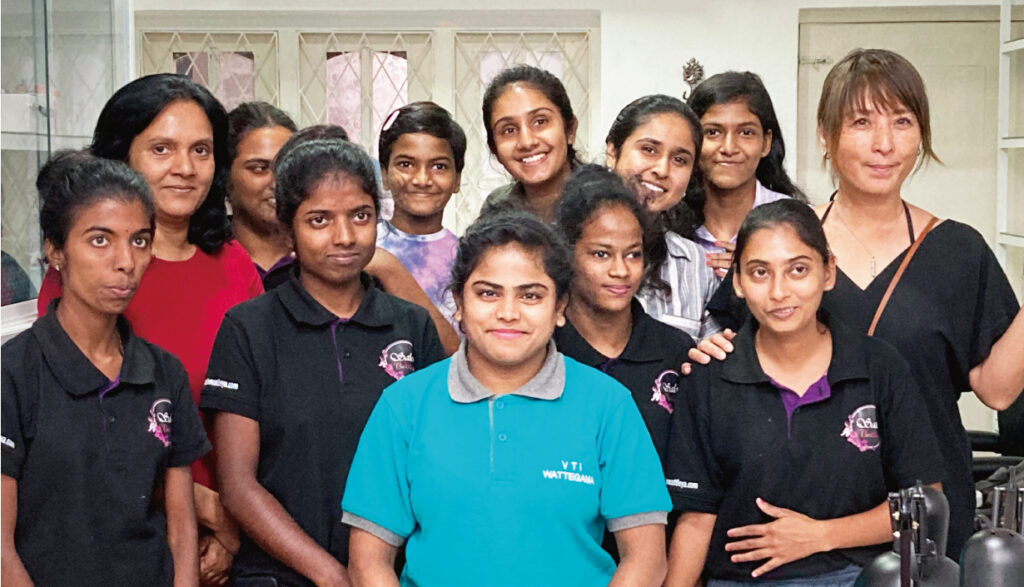
This project involves training young Sri Lankan women with hearing and developmental disabilities up to professional nail technician standard and opening a dedicated nail salon for them to work in Colombo, the capital. Local vocational schools for people with disabilities do not to teach the very latest techniques and trends—something that is essential in the fashion-driven beauty sector—while few workplaces equipped to manage people with disabilities exist in any field at all. This project empowers young women with disabilities to do interesting work in an aspirational sector, earn money and live fulfilled and independent lives.
Challenge
In Sri Lanka, over 1 million people out of a population of 22 million are estimated to have disabilities. At 15.7%, the poverty rate for households with a disabled member is almost double the national average. Around 70% of people with disabilities of prime working age are not in employment and live a marginalized, economically insecure existence. Parents are fearful of how their disabled children will cope when they are no longer there to care for them. Despite legislation supporting their employment, the education and vocational training systems for people with disabilities are inadequate. Prejudice is also a problem, particularly for women and people with communication difficulties.


Solution
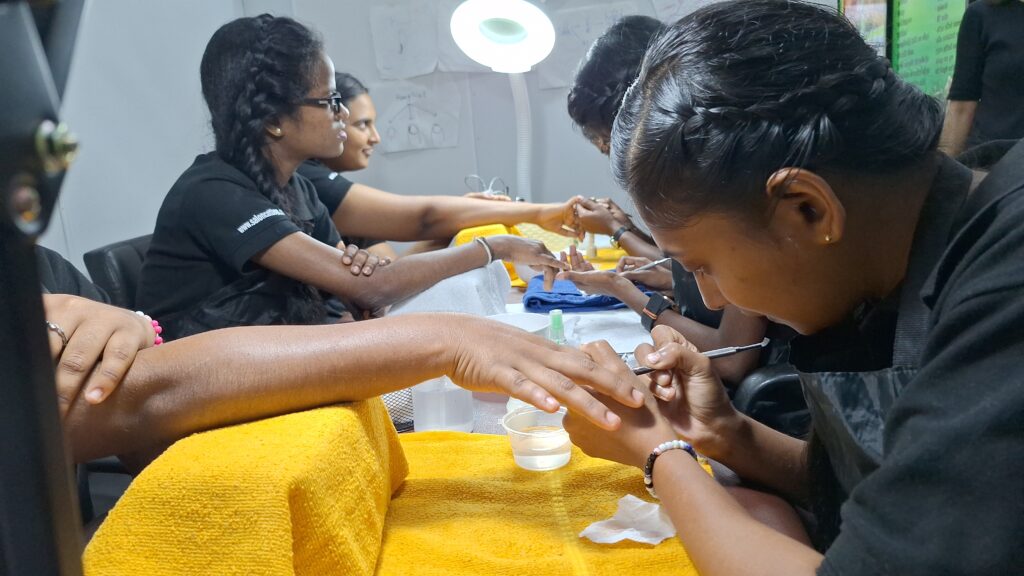
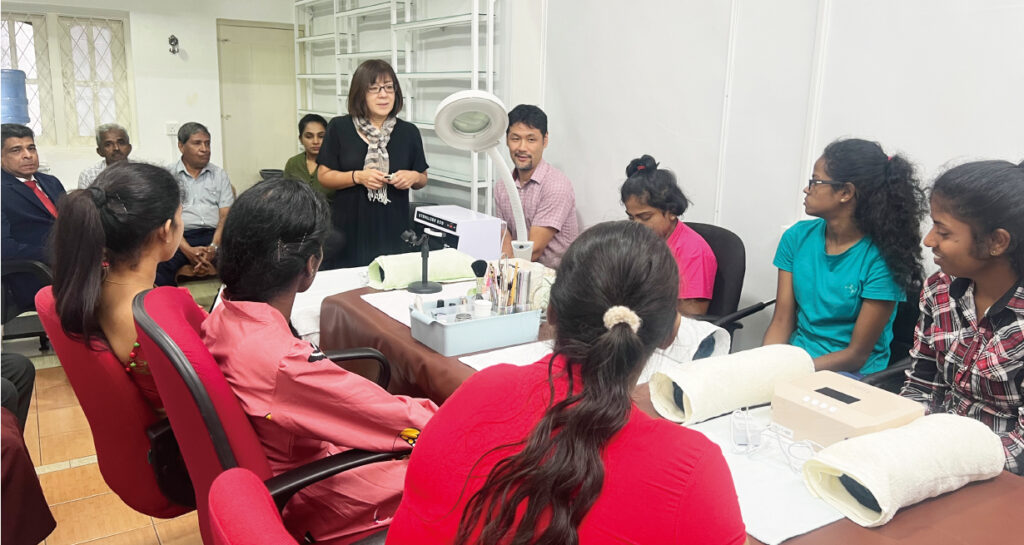
This project equips young women with hearing and developmental disabilities with the necessary skills to work as nail technicians and provides them with employment in Thusare Lights Up, a dedicated nail salon scheduled to open in September 2025. The first six participants are receiving six months of training, including from a professional nail artist flown in from Tokyo. The project is using local media to promote awareness, develop social understanding and secure local community support. The salon is strategically located above a massage salon operated by people with impaired sight, promising synergy effects.
Long-Term Impact
As well as equipping differently abled Sri Lankan women with in-demand skills, this project provides a genuinely inclusive workplace where they can apply those skills. The project will be ongoing, with an intake of a minimum four women every year. We are confident that Thusare Lights Up nail salon will serve as a powerful model, inspiring positive change in training and employment opportunities for disabled people while providing a practical roadmap for other NGOs and social businesses to follow.
Outline of activities
1. Salon opening and preparation for operation
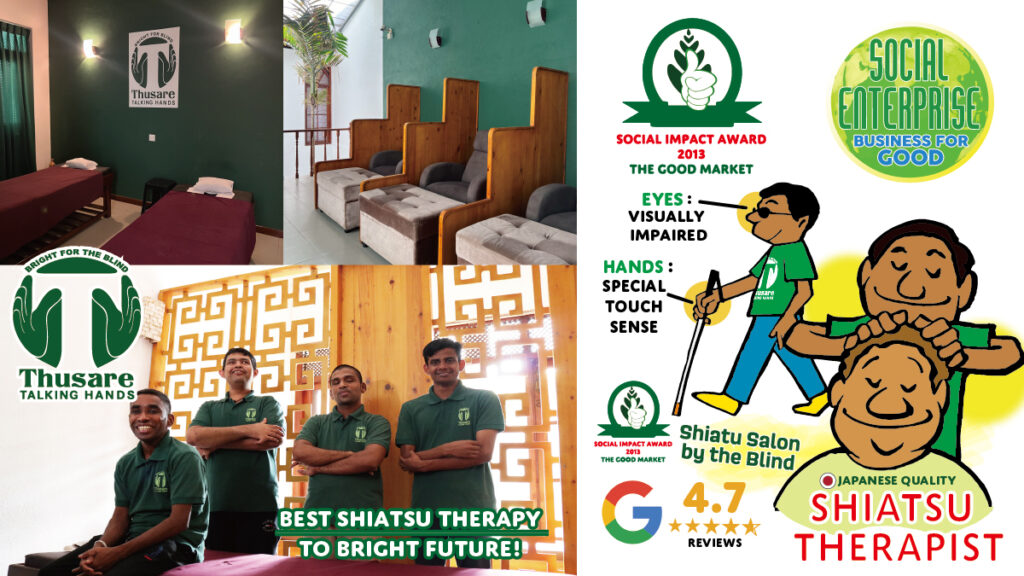
Renovate the 2nd floor of ‘Thusare Talking Hands’ (a Shiatsu salon run by APCAS where visually impaired people work) in the centre of Colombo City, and develop it as a nail salon.


2. Technical guidance and training
Conducted intensive instruction by nail experts invited from Japan
Support for practical skill development through workshops and mock treatment opportunities.
Individual guidance and feedback, including online from Japan
Create training plans according to the aptitudes and wishes of participants for second term
(*At least four new participants).


3. Awareness-raising activities and promotion of social understanding
Disseminate salon activities and success stories through the media and SNS (in collaboration with government agencies and organisations supporting people with disabilities).
Organise events for local communities and stakeholders to deepen understanding of disability and provide opportunities for more people to become aware of the activities of women with disabilities.
4. Expansion and strengthening of networks
Seek stable management of the project and expansion of the business network through continuous networking in cooperation with other support groups and companies for people with disabilities.
Project objectives

Through the first step of opening a salon,
- To expand new job opportunities for young women in Sri Lanka as manicurists (creation of new job opportunities).
- To create a place where people who are deaf or developmentally challenged can work in their own way (creation of inclusive workplaces).
Furthermore, through the stable operation of Sri Lanka’s first nail salon where people with disabilities work,
- To communicate, through actual examples, that people with disabilities are able to get the jobs they want according to their own characteristics (model case for promoting understanding of disabilities).
Project implementation schedule
[Identify issues, feasibility of implementation].
- May 2024: Hearing and inspection at Wategama Vocational Training School
- August 2024: Discussions on cooperation with APCAS to open salons.
[Selection of beneficiaries and start of training]
- Sept 2024: Decision to open a nail salon; start of project
- Nov 2024: Determination of 6 participants for training
- Dec 2024 – Jan 2025: Implementation of first training by Japanese nail technician (40 days, 270 hours)
- Feb-Mar 2025: Pro manager continues to stay, prepare for salon opening and manage the training
- April 2025-: Training continues at a facility in the suburbs of Colombo City.
Preparation of salon facilities for the opening of the salon].
- June 2025: Start of nail salon renovation work.
- September 2025: Nail salon ‘Thusare Lights Up’ officially opens.
Target amount and use of funds
Target amount and use of funds
First Goal 3,000,000 JPY
Facility renovation and equipment-related costs: 2 million yen
Salon management labour costs (partial): 800,000 yen
Training implementation costs: 2.2 million yen.
Second Goal 5,000,000 JPY
Types of donations
英語のページで寄付の種類を紹介しておくと日本語ページに移動した時に迷わずにすむかな、、、と。
| Donation-based | Reward-based | |
| 5000 | Thanks letter | Thanks letter + |
| 10000 | Thanks letter + | |
| 20000 | Thanks letter + | |
| 50000 | Thanks letter + | |
| 100000 | Thanks letter + | |
| 200000 | Thanks letter + | |
| 300000 | Thanks letter + | |
| 500000 | Thanks letter + |